Talking about everyday aches and pains in French: what to say and what you might hear back
Headaches, stomach aches, colds, allergies… mention a minor ailment in France and someone will probably have something to suggest. Learn what to say, what you might hear back and how to decode familiar names like Doliprane, Spasfon and Fervex, plus everyday health expressions, with a practical quiz, cheat sheet and a few cultural detours along the way.


Talking about minor aches, pains and temporary ailments in France is surprisingly ordinary. A headache at work, a cold that won't go away, an itchy allergy, a bad night's sleep: mention that you're not feeling your best and there's a good chance the conversation will quickly become quite lively.
Your colleague may tell you about the headache she had last week. A friend might share how stressed she feels every Sunday evening. Another parent may casually announce that their child has lice again.
And, very often, someone will have something to suggest.
« Tu veux un Doliprane ? »
« T'as essayé le Spasfon ? »
« J'ai du Gaviscon si tu veux. »
« Prends un antihistaminique. »
« Mets de l'arnica. »
This is where an otherwise perfectly ordinary conversation can suddenly become much less obvious if you didn't grow up in France.
Talking about small health problems can be an easy way to show empathy. People compare experiences, sympathise, recommend a family remedy, tell you what worked for them or offer whatever they happen to have nearby. Your colleague, friend or neighbour may effectively open their medicine cabinet for you, at least mentally.
The problem is that they will often assume you already know what's inside it.
Doliprane, Spasfon, Fervex, Smecta, ZymaD, sérum phy, antihistaminique, antibios… These names and shortcuts can sound completely ordinary to someone who has heard them since childhood, and considerably less obvious to an international resident who may know perfectly well what paracetamol, allergies or stomach cramps are.
That is exactly what we're interested in here.
This isn't about learning how to give your doctor a precise medical description of your symptoms. We're interested in the much more informal French you use when everyday discomforts come up with colleagues, friends, neighbours, other parents or sometimes even people you barely know.
In this guide, you'll learn how to:
- talk naturally about common aches, pains and minor discomforts in French
- understand the kinds of responses you may hear from friends, colleagues and people around you
- decode some of the French medicine names, everyday health vocabulary and spoken shortcuts commonly used in France
- distinguish, when useful, between a brand name, an active ingredient and a type of treatment
- find reliable information when someone mentions a medicine you don't recognise.
You'll also find a short quiz along the way to test how well you can decode the French medicine cabinet, plus a few cultural detours to help explain why these conversations can feel so familiar in France.
The aim isn't to tell you what to take. It's to make sure that the next time someone says « T'as pas pris un Doliprane ? », the French isn't the easy part of the sentence.
How to say you're not feeling quite right
When you're talking to a doctor, you may want to describe your symptoms precisely. In everyday conversation, things are usually much simpler.
You don't need a complete medical vocabulary to tell a colleague you have a headache, mention that your stomach feels off or explain why you're not quite yourself today. In fact, French relies on a handful of very reusable structures that cover a surprising number of situations.
Je me sens…: when something just feels off
If you can't point to one specific pain but you simply don't feel quite right, je me sens… is one of the easiest structures to use.
| When you're not feeling quite right | ||
|---|---|---|
| Je me sens pas très bien. | I'm not feeling very well. |
|
| Je me sens un peu vaseux. | I'm feeling a bit groggy / woozy. |
|
| Je suis un peu patraque. | I'm feeling under the weather. |
|
| Je suis crevée. | I'm exhausted. |
|
Patraque is particularly useful here. It's informal and deliberately vague: you're not seriously ill, but you're clearly not at your best.
And in spoken French, don't be surprised to hear the ne disappear: « Je (ne) me sens pas très bien ». That is exactly the kind of sentence you might say when someone at work notices you look tired and asks: « Ça va ? »
J'ai mal à / au…: saying where it hurts
When something actually hurts, the key structure is: J'ai mal à + body part
The preposition changes depending on the word that follows:
| Saying where it hurts | ||
|---|---|---|
| J'ai mal à la tête. | I have a headache. |
|
| J'ai mal au ventre. | My stomach hurts. |
|
| J'ai mal à la gorge. | I have a sore throat. |
|
| J'ai mal au dos. | My back hurts. |
|
And everyday French often gives you a few more colourful alternatives:
| More colourful alternatives | ||
|---|---|---|
| J'ai mal au crâne. | My head hurts / I've got a headache. |
|
| J'ai un de ces mal de crâne ! | I've got such a headache… |
|
| J'ai l'estomac en vrac. | My stomach is all messed up. |
|
The last one is very informal, but exactly the kind of thing you might say to a friend or colleague rather than to your doctor.
J'ai…: headaches, colds, fever and other everyday complaints
French also uses avoir for a large number of common ailments and symptoms. You might say:
| Common everyday complaints | ||
|---|---|---|
| J'ai un rhume. | I have a cold. |
|
| J'ai de la fièvre. | I have a fever. |
|
| J'ai la nausée. | I feel nauseous. |
|
| J'ai le nez bouché. | My nose is blocked. |
|
| J'ai une gueule de bois. | I have a hangover. |
|
This last expression is informal, of course, but very useful if the cause of your suffering is less mysterious than the symptoms.
Ça me gratte / ça me démange / ça me brûle: when something is bothering you
Not every minor ailment is really a pain.
Sometimes something itches, burns or simply feels irritated. In those cases, French often uses: Ça me + verb
| When something itches, burns or stings | ||
|---|---|---|
| Ça me gratte. | It's itchy. |
|
| Ça me démange énormément. | It itches a lot. |
|
| Ça me brûle. | It burns. |
|
| Ça me pique. | It stings. |
|
You can then add where: « Ça me gratte sur le bras. » Or explain what happened: « Je me suis fait piquer. »
At this point, you've done the easy part: you've explained what's bothering you.
What happens next is where French everyday health conversations become more interesting.
Because once you've said J'ai mal au crâne, J'ai l'estomac en vrac or Ça me gratte, there's a fair chance the person in front of you will immediately start mentally rummaging through their medicine cabinet.
Let's see what tends to come out of it.
Headaches, tiredness and hangovers
Everything is going perfectly well. You've had lunch with your colleagues, survived a presentation in front of your boss and still have a mountain of work to get through. Then, out of nowhere, a pounding headache sets in and your good mood starts to disappear with it.
Eventually, one of your colleagues notices: « Ça va ? »
There's not much point pretending anymore: « J'ai un de ces mal de crâne »
And this is usually the moment when your colleague's mental medicine cabinet opens.
What you might hear back
| 👂 What your colleague may suggest | ||
|---|---|---|
| T'as pris un Doliprane ? | Did you take a Doliprane? |
|
| Tu veux un Doliprane ? | Do you want a Doliprane? |
|
| J'ai de l'Efferalgan si tu veux. | I've got some Efferalgan if you want. |
|
| T'as pas de l'aspirine ? | Don't you have any aspirin? |
|
If you look more exhausted than ill, the suggestions may be a little less pharmaceutical:
| 👂 Less pharmaceutical suggestions | ||
|---|---|---|
| J'ai de la vitamine C si tu veux. | I've got some vitamin C if you want. |
|
| Tu veux un café ? | Do you want a coffee? |
|
| Va prendre un peu l'air ! | Go get some fresh air! |
|
And if the real problem is that last night went on a little longer than planned and you admit to having une gueule de bois, the sympathy may come with a fair amount of teasing.
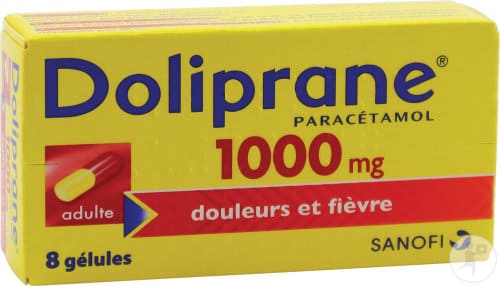
Doliprane, Efferalgan, Dafalgan: three names, one familiar ingredient
Doliprane, Efferalgan and Dafalgan are three names you're very likely to come across in France.
They are different brands, but they all contain the same active ingredient: paracétamol.
That's a useful little reflex to develop when you live in another country. The brand name may be completely unfamiliar, while the active ingredient turns out to be something you already know perfectly well.
Aspirine and vitamine C: less decoding required
Aspirine is much more transparent internationally, so it usually needs less explanation.
Vitamine C is also familiar, but it comes up surprisingly often in casual conversations about tiredness, colds or simply feeling run down.
No mysterious medicine-cabinet vocabulary this time. Just the same familiar reflex: you mention you're not feeling great and someone has something to suggest.
And, quite often, something to offer you from a drawer, handbag or office cupboard.
Stomach aches, cramps and digestive problems
Sunday lunch was excellent. Perhaps a little too excellent. A generous starter, a main course you definitely didn't need seconds of, cheese because apparently the meal wasn't over yet, and dessert because refusing would have been rude.
A few hours later, your stomach has started filing a formal complaint.
You mention it to a friend:
| Telling a friend about your stomach | ||
|---|---|---|
| J'ai l'estomac en vrac. | My stomach is all messed up. |
|
| J'ai les intestins qui travaillent. | My bowels are acting up. |
|
And once again, the French medicine cabinet opens.
What you might hear back
Depending on what exactly is bothering you, you may hear:
| 👂 What your friend may suggest | ||
|---|---|---|
| Tu veux un Spasfon ? | Do you want a Spasfon? |
|
| J'ai du Smecta si tu veux. | I've got some Smecta if you want. |
|
| Tiens, prends du Gaviscon. | Here, take some Gaviscon. |
|
You may recognise none of these names. To a French person, however, they can feel as familiar as Doliprane.
The important thing is that they don't all refer to the same kind of digestive problem.
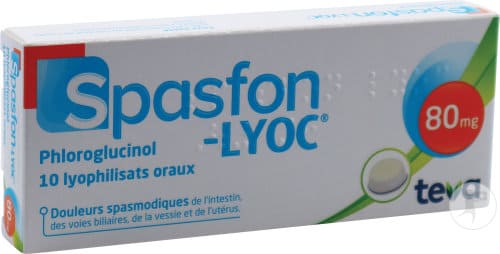
Spasfon: a particularly French medicine-cabinet reference
If you spend enough time in France, Spasfon is a name you're very likely to hear.
Its active ingredient is phloroglucinol, and it belongs to a category of medicines called antispasmodiques. In other words, if your stomach seems to be tying itself in knots, don't be surprised if someone produces a Spasfon with the confidence of a seasoned pharmacist.
Smecta: when the problem is rather more urgent
Smecta is another name many French households will immediately recognise.
Its active ingredient is diosmectite, and it is commonly associated with diarrhoea and other intestinal troubles.
Which means that if someone discreetly asks: « T'as du Smecta ? »
...you can probably assume the Sunday lunch situation has moved beyond “I ate a bit too much cheese.”
And Gaviscon?
Then there is Gaviscon, for a completely different kind of digestive rebellion. Think reflux, heartburn and acid coming back up rather than cramps or diarrhoea. Its active ingredients include sodium alginate and sodium bicarbonate.
So you might hear: « J'ai des brûlures d'estomac. »
followed almost immediately by: « T'as pris du Gaviscon ? »
Three digestive complaints, three very different references.
Very French, very practical and not necessarily the conversation you expected to be having after lunch.
Colds, fever and feeling under the weather
It starts innocently enough. A slightly scratchy throat in the morning. A few sneezes on the métro. By lunchtime, your nose is blocked, your voice has dropped an octave and there's a growing pile of tissues next to your keyboard.
You try to carry on as normal.
Your colleague is not convinced: « T'es malade ? »
You finally admit it: « Je crois que je couve quelque chose. »
That's usually enough to get the suggestions flowing.
What you might hear back
| 👂 What your colleague may recommend for a cold | ||
|---|---|---|
| T'as pris du Fervex ? | Have you taken any Fervex? |
|
| Prends un Doliprane si t'as de la fièvre. | Take a Doliprane if you've got a fever. |
|
| Fais-toi une tisane avec du miel et du citron. | Make yourself a herbal tea with honey and lemon. |
|
| Tiens, prends un Kleenex. | Here, take a tissue. |
|
And, depending on the person, you may also receive detailed instructions involving lemon, thyme, ginger or a family remedy that has apparently never failed anyone since 1973.
The French have a very useful expression for this: un remède de grand-mère
It doesn't necessarily mean your actual grandmother invented it. 😅 It's the kind of remedy that gets passed down through families and friends: honey for a sore throat, thyme infusions, lemon, steam, and all the little recipes people swear by.
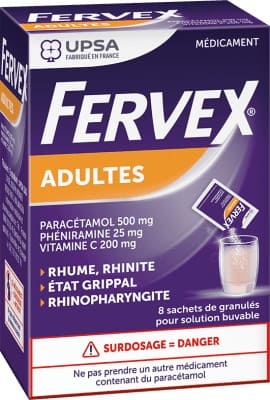
Fervex: the little sachet that comes out when a cold arrives
Fervex is one of those names that can sound completely mysterious when you first arrive in France, but very ordinary once you've spent a winter here.
It comes in sachets that are dissolved in water and contains paracétamol, vitamine C and an antihistaminique called phéniramine.
So when someone says: « Prends du Fervex. »
...they're referring to a combination medicine associated with cold symptoms, not some uniquely French ingredient you've never encountered before.
Doliprane makes another appearance
And yes, Doliprane is back.
That's part of the point: the same familiar medicine names pop up in several different everyday situations. Someone with a headache may be offered one. Someone with a fever may hear the same suggestion.
You're starting to see why certain boxes seem to occupy permanent residency in French medicine cabinets.
Je couve un truc: a useful phrase before you even know what's wrong
There's one expression worth stealing from this situation: « Je couve un truc. » or « Je couve quelque chose. »
Literally, couver means to incubate or brood, as a hen does with an egg. In everyday French, though, it's exactly what you can say when you can feel an illness arriving but haven't yet decided whether you've got a cold, the flu or simply need a very long night's sleep.
And if you say it within earshot of a French friend, there's a reasonable chance they'll already be halfway through recommending something.
Or, if they happen to be a bit hypocondriaque, quietly creating a little more distance between you.
Allergies, itching and insect bites
Spring in France can be beautiful. The terraces are full again, the parks are green, the windows are open...
...and suddenly your eyes are watering, your nose won't stop running and you've sneezed six times in a row.
Or perhaps it's summer, you've spent a lovely evening outside, and a mosquito has apparently decided that you were dinner.
Either way, sooner or later you may find yourself saying:
| When allergies or insects strike | ||
|---|---|---|
| J'arrête pas d'éternuer. | I can't stop sneezing. |
|
| J'ai les yeux qui piquent. | My eyes are stinging. |
|
| Ça me gratte partout. | I'm itchy all over. |
|
| Je me suis fait piquer. | I got bitten/stung. |
|
And once again, someone nearby may have exactly the thing they think you need.
What you might hear back
| 👂 What someone may offer you | ||
|---|---|---|
| T'as pris un antihistaminique ? | Have you taken an antihistamine? |
|
| J'ai du Zyrtec si tu veux. | I've got some Zyrtec if you want. |
|
| Moi, je prends de l'Aerius. | I take Aerius. |
|
| Mets un peu d'Apaisyl dessus. | Put some Apaisyl on it. |
|
This time, you'll hear both categories of medicine and brand names, sometimes in the very same conversation.
Un antihistaminique: the useful word behind the brands
Unlike Doliprane, Spasfon or Fervex, antihistaminique isn't a brand. It's a type of medicine.
So someone might simply ask: « T'as un antihistaminique ? »
Useful to recognise, especially since the brand names can vary.
Zyrtec contains cetirizine and is used for allergy symptoms such as allergic rhinitis and urticaria.
Aerius contains desloratadine.
Apaisyl or Aspivenin: when insects get involved
For itching and insect bites, you may hear someone suggest Apaisyl.
Apaisyl is a topical antihistamine used for itching, including itching caused by insect bites. So after a summer evening outdoors, you might hear: « Mets-toi un peu d'Apaisyl dessus. »
And if you've just been stung or bitten by a wasp, bee, hornet or spider, don't be surprised if someone reaches for an Aspivenin.
Aspivenin isn't a medicine. It's a small suction pump sold in French pharmacies as a first-aid device, and it's one of those objects you may well come across in a family first-aid kit, especially if people spend a lot of time outdoors.
Not much linguistic mystery there once you know the names. Unfortunately, neither Apaisyl nor Aspivenin will stop the insects from finding you in the first place. 🦟
Bruises, bumps and little accidents
You miss a step on the stairs, walk straight into the corner of a table or discover that your child has somehow managed to acquire a spectacular bruise without remembering how.
Nothing dramatic. Just the usual little accidents of everyday life.
You might say:
| After a little accident | ||
|---|---|---|
| Je me suis cogné(e). | I bumped myself. |
|
| J'ai un sacré bleu. | I've got quite a bruise. |
|
| Je me suis fait mal. | I hurt myself. |
|
| J'ai une bosse. | I've got a bump. |
|
And, once again, there's a good chance someone will come back with a very familiar French suggestion:
What you might hear back
| 👂 What someone may suggest for a bump | ||
|---|---|---|
| Mets de l'arnica. | Put some arnica on it. |
|
| T'as de l'arnica ? | Do you have any arnica? |
|
| Prends de l'Arnica 9 CH. | Take some Arnica 9 CH. |
|
| Mets du Voltaren dessus. | Put some Voltaren on it. |
|
For many people in France, arnica is one of those medicine-cabinet reflexes that seems to appear almost automatically when there's a bump, bruise or knock.
And if the injury feels a little more muscular or painful, you may also hear Voltaren. The familiar gel contains diclofénac, an anti-inflammatory often used for things like sprains, bruises and muscular pain.
Arnica: a very familiar French reference
You may come across Arnica as a gel, cream or in the form of little homeopathic granules.
One familiar label is Arnica montana 9 CH. The 9 CH refers to the homeopathic dilution used in the preparation.
And if you're wondering why those little tubes of granules seem to be everywhere, homeopathy has had a particularly visible place in French pharmacies and family medicine cabinets for decades.
When medicine names slip into everyday conversation
Not every health conversation starts because someone feels unwell.
Sometimes you're simply having lunch with friends when someone refuses a glass of wine:
« Non merci, je suis sous antibios. »
Nothing dramatic. Just the kind of health talk that slips easily into everyday conversation.
Je suis sous…: a very common way to talk about treatment
In French, être sous + treatment is a very natural way to say that someone is currently taking or undergoing a treatment.
You might hear:
| 👂 Talking about a treatment | ||
|---|---|---|
| Je suis sous antibios. | I'm on antibiotics. |
|
| Je suis sous cortisone. | I'm on cortisone. |
|
| Je suis sous traitement. | I'm undergoing treatment / I'm on medication. |
|
| Je suis sous Xanax en ce moment. | I'm on Xanax at the moment. |
|
It's short, practical and used well beyond the doctor's office.
Antibios, médocs and other shortcuts
French also likes shortening medical words in everyday conversation.
Les antibiotiques very often become les antibios: « Le médecin m'a mis sous antibios. »
And un médicament often becomes un médoc: « Je dois prendre mes médocs. » or « Tu prends encore des médocs pour ça ? »
Médoc is informal, very common and one of those little words that makes everyday French suddenly much easier to follow once you know it.
Xanax, Lexomil, Prozac... when medicine names become part of the joke
And then there are the medicine names that sometimes leave the world of prescriptions altogether.
Someone is getting far too worked up in a meeting? « Y en a un ici qui devrait prendre un Xanax. »
A friend is stressing over absolutely everything? « Il te faut un Lexomil ! »
And if someone is being especially gloomy, Prozac may find its way into the joke too.
Of course, nobody is seriously prescribing anything. The names are simply familiar enough to have become shorthand for “calm down”, “relax” or, in Prozac's case, “cheer up a little.”
It's the sort of humour you may hear between friends, around the office or in French comedy, where stress, nerves and medication regularly become part of the banter.
So if Xanax, Lexomil or Prozac suddenly appears in a conversation where nobody is actually talking about treatment, don't worry. The medicine cabinet has simply wandered into the joke.
The French family medicine cabinet
Parenthood has a funny way of teaching you vocabulary you never thought you'd need.
Sérum phy, anti-poux, vermifuge, ZymaD... and, of course, Doliprane making yet another appearance.
Sooner or later, another parent will say something that sounds perfectly normal to them and completely cryptic to you.
Sérum phy: the small bottle that appears everywhere
One of the first expressions parents tend to pick up is: « T'aurais pas un peu de sérum phy ? »
Sérum physiologique is very often shortened to sérum phy, especially when talking about babies and young children.
You might hear: « Nettoie-lui le nez avec du sérum phy. »
or: « J'ai toujours du sérum phy dans mon sac. »
If you have a baby in France, there's a fair chance this expression becomes part of your vocabulary remarkably quickly.
Les poux: the message every parent hopes not to receive
Then there is school. One day, a message appears: « Il y a des poux dans la classe. »
And suddenly everyone is checking heads. You'll quickly come across:
| Head-lice vocabulary | ||
|---|---|---|
| les poux | head lice |
|
| un traitement anti-poux | a head-lice treatment |
|
| un peigne anti-poux | a lice comb |
|
Not glamorous, perhaps, but very useful French if you have children.
Un vermifuge: another word parents learn sooner than expected
At some point, another parent may casually ask: « Tu lui as donné un vermifuge ? »
A vermifuge is a treatment used against intestinal worms. And in France, you may very quickly hear a brand name instead: « Donne-lui du Fluvermal. »
Fluvermal contains flubendazole and is one of those familiar names that can pop up in conversations between parents, particularly when les vers have made an unwelcome appearance in the family.
Not necessarily the French vocabulary you imagined learning when you moved here, but family life has its own curriculum.
Vitamin D: another familiar family reference
Vitamin D is another one that tends to appear very early in family life in France. At the pharmacy, at the paediatrician's or in conversation with other parents, you may hear: « Tu lui donnes de la vitamine D ? »
Or simply the name of a familiar product such as ZymaD or Adrigyl.
Mercurochrome: another name you'll spot everywhere
Then there's Mercurochrome, a name you're very likely to see in French bathrooms, medicine cabinets and supermarket first-aid aisles.
Today, it's a whole first-aid brand, with everything from disinfectants and dressings to saline solution and arnica gel.
So you may hear something like: « T'as du Mercurochrome ? »
In this case, people are usually referring to the disinfectant. Why did it become so well known? The original product was bright red, so when a child had Mercurochrome on a cut or scrape, you could definitely see it! Today, the product is colourless.
Beyond medicine: familiar names you'll hear around health and comfort
Not everything in the French medicine cabinet is actually medicine. Sometimes you're trying to sleep, your lips are dry or someone nearby has started sneezing into thin air and suddenly another familiar brand name enters the conversation.
These are the little everyday references that rarely make it into a textbook, but turn up all the time in real life.
Labello: when your lips need rescuing
It's cold, windy and your lips have seen better days. Someone reaches into their bag: « Tu veux du Labello ? »
Labello is a brand, of course, but the name is familiar enough that you may hear it used very casually when people mean lip balm.
You may also hear: « T'as pas du Labello ? »
A very useful sentence in February.
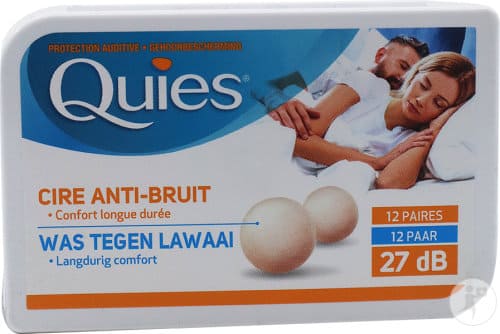
Boules Quies: when you really need some peace and quiet
Your neighbours are having a party. Someone in the hotel room next door has discovered late-night furniture rearranging. Or perhaps your partner snores.
This is when another very French name may appear: « J'ai des Boules Quies si tu veux. »
Boules Quies is a brand name, but in everyday French it's closely associated with earplugs in general. And yes, the name is rather charming once you know what it means: quies comes from Latin for rest or quiet. Which is exactly what you're hoping for at 2 a.m.
Coton-Tige: another name hiding in plain sight
Then there's Coton-Tige. You may hear: « T'aurais pas des cotons-tiges ? »
Coton-Tige started life as a brand name, but became so widely used that coton-tige is now commonly treated as an ordinary French word for those little cotton-tipped sticks people mainly use for cleaning their ears.
And occasionally, it may even appear in a joke if someone keeps asking you to repeat yourself: « Tu veux un coton-tige peut-être ? »
Not necessarily the most sophisticated joke in the French repertoire, but you'll understand what they mean. It reminds me of the classic: « Les oreilles c'est comme le reste, ça se lave ! » 😁
How to check a medicine name you don't recognise
We've already come across a few names that seem to pop up again and again whenever someone mentions a minor ache, pain or temporary discomfort. Doliprane, for example. You get the reference by now, right? 😅
But French people can easily throw plenty of other medicine names into the conversation. And then there are les génériques: versions containing the same active ingredient as a well-known branded medicine, often under a completely different name.
So if someone mentions a medicine you don't recognise, a quick search on Vidal can be very useful.
Start with the active ingredient
The most useful thing to look for, or ask about, is usually the principe actif.
Brand names can vary, but the active ingredient tells you much more clearly what's actually in the medicine.
For example:
- Doliprane → paracétamol
- Spasfon → phloroglucinol
- Zyrtec → cetirizine
- Fluvermal → flubendazole
So if a colleague, friend or another parent suddenly mentions a medicine name you've never heard before, checking the principe actif is often the quickest way to work out what they're talking about.
Vidal: your French medicine decoder
Vidal is one of the best-known medicine references in France.
Type in the name you've just heard and you can quickly check what the medicine contains, what it's used for and the different forms it comes in.
There is also the official Base de données publique des médicaments, which is less glamorous but very useful if you want to check the official information for a medicine sold in France.
And if you don't feel comfortable figuring it out on your own: « Je vais demander au pharmacien. »
Sometimes the easiest way to decode a mysterious French medicine name is simply to ask someone who deals with them all day.
🎁 Cheat sheet: everyday aches, pains and medicine talk in French
And to finish, we've brought together the everyday French health vocabulary, expressions and medicine-cabinet references from this guide that are most likely to come up in real conversations about minor aches, pains and discomforts.
Need something quickly? Search by word or filter by situation to find what you might say, what you might hear back and what that mysterious French reference actually means.
🎁🎁 Quiz: can you decode the French medicine cabinet?
You've now met Doliprane more times than you probably expected, survived les poux, discovered sérum phy and hopefully remembered what Spasfon is for.
Time to see how well you'd cope with a real-life French conversation.
Prêt(e) ?
Ready for the next everyday health conversation?
If there is just one thing to take away from this guide, it is this: talking about small aches, pains and temporary ailments is simply part of everyday conversation in France.
Someone mentions a headache, a cold, an upset stomach or a child with lice. Someone else sympathises, shares their own experience and, very often, has something to suggest.
The difference now is that when the mental medicine cabinet opens, you have a much better idea of what's inside it.
Doliprane, Spasfon, Fervex, sérum phy, antihistaminiques, antibios... You don't need to memorise every brand name or become an expert on French medicines. You just need enough of these references, expressions and shortcuts to understand what people are talking about, ask a question when you don't and stay part of the conversation.
At Novexpat, we are convinced of one thing: everyday life in France is full of opportunities to practise and make progress in French, as long as you have the right tools to make the most of them. That is exactly the idea behind our FrenchUp programme: helping you make progress through the situations and conversations that genuinely matter in your everyday life in France.
So the next time someone asks « T'as pas pris un Doliprane ? », you'll know exactly what they've just pulled out of the French medicine cabinet. And if they mention something you've never heard of?
« C'est quoi ? »
« C'est pour quoi ? »
One little question, one extra exchange and one more piece of everyday French you'll probably remember next time. 😊
FAQ – Talking about everyday aches and pains in French: what to say and what you might hear back
Yes. Minor ailments and temporary health complaints come up quite naturally in everyday conversation in France, especially with colleagues, friends, neighbours and other parents.
A headache, a cold, tiredness or a child with lice may quickly lead to shared experiences, sympathy, home remedies or familiar medicine suggestions. It usually isn't a particularly intimate or formal conversation. That's precisely why knowing a few common expressions and medicine references can make everyday French much easier to follow.
Doliprane is a very common French brand of paracetamol, used for pain and fever. So if someone asks « T'as pris un Doliprane ? » after you mention a headache, they're essentially asking whether you've taken paracetamol. You may also come across other paracetamol brands in France, including Efferalgan and Dafalgan.
Spasfon is an antispasmodic medicine containing phloroglucinol. Officially, it is used for different types of spasmodic pain. In everyday conversation, however, you're particularly likely to hear French people mention it when someone complains about stomach cramps or digestive spasms: « Tu veux un Spasfon ? » may therefore sound remarkably familiar once you've lived in France for a while.
A simple and natural option is « Je me sens pas très bien. » I'm not feeling very well. In informal French, you can also say « Je suis un peu patraque. » I'm feeling under the weather, or « Je suis crevé(e). » I'm exhausted if tiredness is really the problem.
Which one you choose depends on how specific you want to be, but you certainly don't need a detailed medical vocabulary for an everyday conversation.
For a headache, the most straightforward expression is « J'ai mal à la tête. » I have a headache. More informally, you may hear « J'ai mal au crâne. »
For stomach pain, « J'ai mal au ventre. » My stomach hurts is extremely useful. If your whole digestive system feels unhappy, the much more informal « J'ai l'estomac en vrac. » My stomach is all messed up is exactly the kind of expression you might use with a friend or colleague.
Start by looking for the principe actif active ingredient. A French brand name may be unfamiliar even when the ingredient itself is something you already know.
You can search the medicine on Vidal or in the official Base de données publique des médicaments to see what it contains and what type of medicine it is. And if you're still unsure, there is always the simplest option: « Je vais demander au pharmacien. » I'll ask the pharmacist.